RevUp Studio is a podcast studio in Norwich, and we run recording sessions for people who want their show to sound right without learning a pile of audio gear first. If you've never booked a podcast recording session before, it helps to know what the hours actually look like. Here's the honest version, start to finish.
Before you arrive
Most of the work that makes a session run smoothly happens in the days before it. We'll ask a few questions: how many people are speaking, whether anyone is joining from elsewhere, roughly how long you want to record, and what the episode is meant to do.
That last one matters more than people expect. An interview show, a solo monologue and a round-table panel all get set up differently. If you're still shaping the format, our content strategy page covers that side of things.
We'd also suggest you bring a loose running order. Not a script, just a list of the points you want to hit and the order you'd like to hit them in. It stops the long pauses where everyone looks at each other wondering what's next.
What to bring
Water, your notes, and anything you want to reference on air. If you're playing clips or adverts, send them over beforehand so we can have them ready rather than hunting for a file mid-session.
Arriving and setting up
Come a little early. The first fifteen minutes or so are setup, and they're not wasted time.
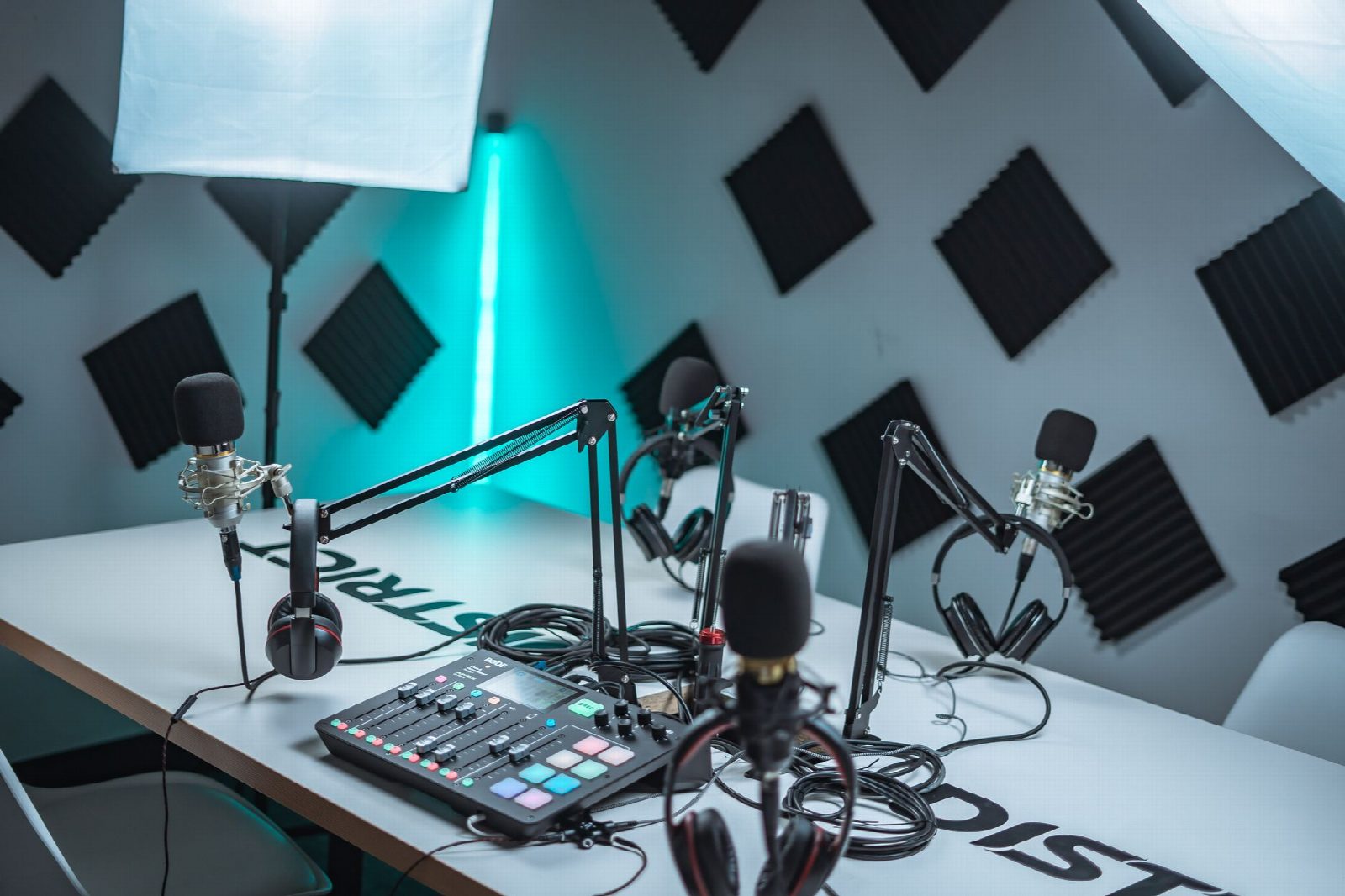
We'll sit everyone down, set mic heights and positions, and get levels. Mic position is the single biggest thing separating a clear recording from a muddy one. Too far away and the room creeps in; too close and every breath lands like a gust of wind. We'll nudge you into the right spot and then ask you to stay roughly there.
Then we do a sound check. You talk normally for thirty seconds about anything at all — what you had for breakfast works fine — while we set gain on each channel. We're listening for anyone who's quiet, anyone who shouts when they get excited, and any rattle from jewellery, chairs or the table.
If you're recording video as well, this is when we frame the shots and set lighting. There's more on that on our video production page.
What a podcast recording session actually feels like
Quieter than you'd think. Once we're rolling, we get out of the way. You talk, we watch the levels.
A few things people are often surprised by:
You can stop. If you fumble a sentence, pause, take a breath and say it again cleanly. We cut the mess out afterwards. You don't have to be perfect live.
Silence is fine. A beat of thinking time edits out neatly. Filling the gap with "um" doesn't.
Headphones take a minute to get used to. Hearing your own voice back in your ears feels odd for the first few minutes, then you forget about it entirely.
It takes longer than the episode length. An hour-long finished episode usually means well over an hour in the room, once you count setup, restarts, a tangent or two and a breather.
We'll give you a signal if something needs attention — a mic knocked off position, a phone buzzing on the table, someone drifting away from the microphone. Otherwise we stay out of your conversation.
Guests joining remotely
If a guest can't make it to Norwich, they can still take part. We record their side separately at full quality rather than relying on the call audio, so a dodgy broadband connection on their end doesn't wreck your episode. Our remote recording page explains how that works.
Wrapping up
When you're done, don't bolt for the door straight away. We'll usually record a minute of room tone — silence in the space with everyone still — which gives the editor something to patch gaps with later.
It's also worth grabbing any pickups while you're still set up. If you realised halfway through that you mispronounced a guest's company name, say it correctly now and we'll drop it in. Re-recording an intro or outro takes two minutes here and is a nuisance to arrange another day.
Then we'll talk through what happens next: what you want the finished episode to sound like, how tight the edit should be, and when you need it.
After the session
Raw recordings aren't the finished article. Editing is where the long pause gets trimmed, the levels get balanced between a loud speaker and a quiet one, and the music and intro get dropped in. That's covered on our post production page.
If you'd rather handle editing yourself, that's absolutely fine — we can hand over the raw multitrack files, with each speaker on their own track so you have full control.
Common first-session mistakes
- Over-planning. A rigid script read word-for-word sounds like a script read word-for-word. Bullet points work better.
- Not testing the format first. Record a short pilot before committing to a twelve-episode run.
- Forgetting the top and tail. The intro and outro are part of the episode. Decide what they say before you're in the chair.
- Scheduling too tight. Give yourself breathing room either side rather than rushing in from another meeting.
If you'd like to talk through a session before booking, call RevUp Studio on 01603 555439 or drop us a line through our contact page.